





Rapscallion Soda x GAIL’s Bakery: What Grows Around a Table
Rapscallion Soda x GAIL’s Bakery: What Grows Around a Table
PT.1
WHAT GROWS AROUND A TABLE
The drinks changed hands almost immediately. MOMO were drinking Rapscallion. We were drinking MOMO. Around us - farmers, millers, cheesemakers, fermenters and other incurable flavour obsessives were comparing notes, swapping stories and cheerfully proving that nobody who makes food and products properly can limit themselves to under 5 minutes talk time.
This was GAIL’s summer lunch, hosted at Henry Astor’s Bruern Farms. We had arrived expecting excellent food and good company. Both appeared in indecent quantities. What caught us off guard was the feeling behind it all.
The afternoon was not a supplier showcase with better crockery. There were no strained introductions followed by a brisk exchange of business cards. GAIL’s had gathered the people behind its food simply to appreciate them, to feed them and to let one good producer discover another. We chewed the fat over lunch made from the collective work around the table. Conversations wandered from ingredients and harvests to processing headaches, growth pains and all the other glamorous matters rarely found on a label.
We found kindred spirits there. People as particular about their raw materials as we are, with the same appetite for doing things properly and the same evidence of what doing things properly can do to a person. These were not anonymous links in somebody else’s supply chain. They were growers and makers with ideas, histories, strong opinions and products into which they had poured an unreasonable amount of themselves.
For Rapscallion, being invited into that company meant more than a lovely afternoon on Henry’s farm. GAIL’s had already changed the course of our business. Now it was giving us a seat among producers we admired and treating our work with the same curiosity and respect. We arrived as a supplier. We left feeling part of something.
That is a difficult thing for a large business to manufacture, which is perhaps why GAIL’s did not try. It simply made the introductions, poured the drinks and gave everybody time. Appreciation is easy to announce. It is harder to practise.
PT.2
TEAM GAIL’S BAKERY
That afternoon offered a glimpse of what we have come to understand about GAIL’s. There are businesses that grow by sanding themselves smooth. The rough edges go first, then the eccentricities, then, almost imperceptibly, the care and sometimes the original goal. What remains is efficient, repeatable - but strangely difficult to love, and hard to pinpoint its soul.
GAIL’s has managed something rarer. It has grown without making quality feel like a story from its past. What began by baking bread for some of London’s best restaurants in the early 1990s became the first GAIL’s bakery on Hampstead High Street in 2005. More than 180 bakeries later, the original standards are still running the show.
Quality at scale can naturally attract controversy. The bigger a business becomes, the more people assume that care must have quietly left by the back door. Having seen behind the scenes, we would argue the opposite.
We should declare our position early: we are Team GAIL’s. Entirely, perhaps suspiciously so? Not because every encounter has been seamless. Growth seldom is, particularly when fresh fruit, raw ingredients, short lead times and several hundred moving parts are involved. GAIL’s stock us, and we back them, because we have seen what sits behind the bakery counter, and because the closer we have looked, the more there has been to admire.

Pt.3
ON THE NATIONAL MAP
Last year, GAIL’s gave Rapscallion that final nudge onto the national map.
That phrase can sound like the sort of misty, cliched business language deployed when nobody wants to produce the numbers. So here is the more honest measure. Before GAIL’s, national scale was something we could discuss around a table. After the first order, it was something we had to deliver, on time, on pallets, with the fruit still tasting like fruit and the ingredients still singing honesty. Gregor had never seen so many lemons in his life, and he’s experienced his fair share of lemons. The site became a blur of zest, juice, bubbly liquid, cans and increasingly inventive ways to find another pair of hands.
GAIL’s did not simply place an order. It collapsed the distance between the business we were and the business we were on the edge of becoming.
We hit the ground at considerable speed. Arse over tit, but still tit over arse nonetheless. Working with a business of this size demanded more of everything: faster decisions, tighter systems, greater agility and the ability to solve tomorrow’s problem while today’s ginger was still arriving and yesterday’s birds eye chilli was slowly burning. As Gregor remembers it, there was very little time for a gentle rehearsal or a cheeky wee warm up. We learned because the alternative was letting down a customer that had taken a meaningful chance on us, and it’s sometimes rare for us to find another F&D brand or business who care as much as we do. We couldn’t let this slip through our sticky fingers.
There is a flattering version of growth in which every order is welcomed, every forecast is correct and everyone goes home at a civilised hour. Then there is growth involving fresh fruit and raw ingredients. The fruit does not care about your spreadsheet. Equipment develops opinions. Lead times shorten without warning. A process that behaves beautifully at one volume may become an entirely different beast at another.
PT.4
THE HARDER WAY: FRUIT TO CAN SODA AT SCALE
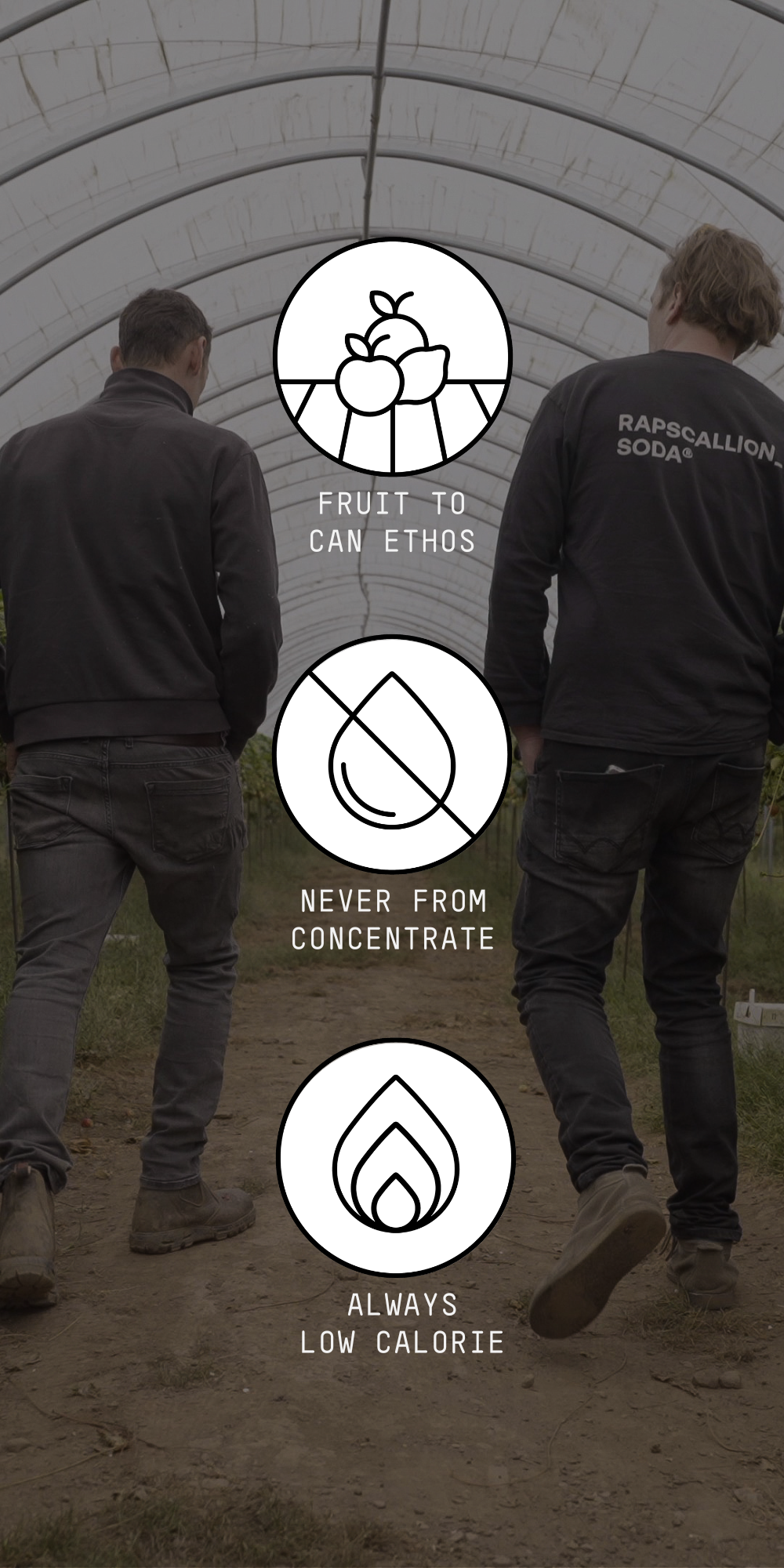
The tempting answer would have been to make the product easier. So why didn’t you, you fools? Find a shortcut. Cut some corners. Loosen a standard. Use derivatives. Stabilisers. Additives. Syrups. Concentrates. Let volume do what volume often does and quietly replace quality with its more convenient cousin, consistency.
We did not. And neither did they.
Our Burnt Lemon still begins with premium, imported fruit. The lemons are washed, soaked, pressed and zested by people. Real people. Not the ones made out of cyber space. The zest is candied and sits overnight, then charred to exchange the chalky bitterness found in many lemonades for something darker and more complex. There are no flavourings waiting in the wings to rescue an indifferent batch. When the ingredient is the flavour, the ingredient has nowhere to hide.
This is one reason the relationship works. GAIL’s understands that quality begins long before a product reaches the shelf. Their food starts in fields, dairies, mills, orchards and workshops, with people chosen not merely because they can supply something, but because they care how it is grown, made and handled. They describe these producers as collaborators. Having worked with them, we know that is not decorative language.

pt.5
BEHIND THE COUNTER
We were lucky enough to step behind the curtain with Roane Rapson, Head of Food Concepts, and what we found was reassuringly untheatrical. No artificial intelligence choosing next season’s lunch. No fleet of zorgs deciding what a neighbourhood might fancy with its coffee. Actual humans. Curious, exacting, occasionally totally knackered humans, all caring about flavour and somehow carrying that care across more than 180 bakeries.
That “somehow” contains an invincible amount of work.
Menus are discussed long before the season they belong to. Ingredients are tasted, questioned and traced back to their source. Ideas move between food, creative, operations, marketing and PR. Producers are brought into the conversation because the ingredient is not a mute object; it arrives with a place, a process and a person attached. Recipes are developed, tested, revised and sometimes abandoned. Bakers then have to make the result fresh, every day, across a national estate, with enough fidelity that the experience still feels considered rather than copied.
Scale makes all of this easier to underestimate. A new bakery opens and the public sees a sign go up. Behind it sits years of accumulated judgement: which flour, which farm, which fat, which fermentation, which producer, which compromise will not be made. When a business becomes visible enough, people begin to confuse familiarity with simplicity. We did too, until we saw the machinery of care from the inside.
The machinery, it turns out, is mostly people.
That matters to us. Rapscallion is built on the belief that raw ingredients deserve attention rather than correction. Great fruit, handled properly, should not require a laboratory’s worth of commercial shortcuts to taste alive. GAIL’s begins from a similar place. It spends more on ingredients than on any other part of its business. It makes as much as it can itself. It works directly with many of its producers. It is willing, in its own words, to choose the harder way when the harder way makes better food.
We recognise that particular form of stubbornness?
PT.6
ONLY THE SURFACE: GAIL’S x RAPSCALLION
The relationship has not only grown our volume. It has sharpened our operation. In our conversation, Gregor kept returning to the same truth: GAIL’s forced us to look at ourselves as a manufacturer, not simply a group of people very good at making bloody great tasting soda. It showed us where our systems bent, where they broke and where we had been relying on enthusiasm to do the work of infrastructure. We learned to plan further ahead, respond faster and protect the product while the pressure around it increased. We learned that agility is not frantic movement. It is the ability to change direction without spilling what matters.
That education was not always elegant. Some lessons arrived disguised as late nights, difficult conversations and processing nightmares. But GAIL’s gave us a reason to solve them properly. The result is a Rapscallion with greater capacity, better systems and a far clearer sense of what must never be traded away in pursuit of either.
And, crucially, GAIL’s treated us as more than a line on a supplier sheet. Their teams wanted to understand the product from the fruit up: why we cold press, why we char zest, why spice matters, why five ingredients can demand more work than twenty. They visited our Glasgow site, asked human questions, and told the story with the same attention they bring to the growers, millers, cheesemakers and fermenters in their existing and wider food community.
For a growing producer, that kind of partnership is catalytic. GAIL’s scale gave us reach, certainly. More importantly, their belief gave other people permission to look twice. A Rapscallion can on a GAIL’s shelf said that we belonged in a national conversation about better food and drink before we were quite used to saying it ourselves. We knew it, we said it, we believe it, we just needed that additional pat on the back.
Now we are.
It would be tidy to end here, with the lemons counted and the lesson learned. But the interesting part of this relationship is that it feels like only the beginning. There are products still to explore, stories still to tell, communities still to meet and an alarming number of ideas already making themselves comfortable.
GAIL’s helped Rapscallion. Together, we have only scratched the surface of what that map might contain.
Next, we are getting properly into the flavour of it. Our forthcoming FLVR episode goes behind the scenes with Roane Rapson at GAIL’s to understand the people, processes and producers responsible for making quality work at scale. Tastebuds at the ready.
We Love A Laugh
But we never muck about when it comes to sourcing the best produce and creating the purest flavour.